You hear the bell before you see the animal. A soft, uneven clang drifts around a bend, and if you are new to trekking in Nepal, you keep walking toward it without a second thought. That single mistake is the fastest way to learn the first of many Himalayan trail rules nobody puts in a packing list. Every trekker who has walked the trails of Nepal has a story about the moment a local guide grabbed their arm and pulled them toward the mountainside, seconds before a loaded yak train came thundering around the corner. These trail rules in the Himalayas are not written on signposts, and no brochure explains them, yet they shape every single day you spend on the trail.
At TrekkersTrekNepal, our guides grew up walking these paths long before they ever led a group, and they have spent years teaching trekkers the trail etiquette in Nepal that keeps everyone safe, respectful, and moving smoothly. This guide breaks down the unspoken Himalayan trail rules around yak traffic, right of way, teahouse manners, and cultural customs so that your first walk through the mountains does not come with any nasty surprises. Whether you are training for the Everest Base Camp Trek or planning a shorter walk like the Ghorepani Poon Hill Trek, these rules of the Himalayan trail apply to you from the very first day.
Trekking rules in the Himalayas exist for a simple reason: the trail is a shared, working road, not a hiking park. Porters carry loads up it, mule trains haul supplies through it, and villagers use it to move between homes every single day. Understanding yak traffic and right of way on the trail is not a nice-to-have skill. It is the difference between a smooth, respectful trek and one where you spend half your time apologizing or, worse, getting hurt on a narrow ledge. Once you know these Himalayan trail rules, you stop feeling like an outsider and start moving through the mountains the way locals do.
What Are the Unspoken Rules of the Himalayan Trail?
The unspoken rules of the Himalayan trail cover three things: who moves first, who steps aside, and how you read the sounds around you. Nobody hands you a rulebook when you land in Kathmandu, so most trekkers pick these habits up the hard way, usually after a close call with a loaded animal on a narrow path. Learning the basic trail etiquette in Nepal before you set out saves you from those awkward moments and earns quiet respect from guides, porters, and fellow trekkers. These rules apply everywhere in the mountains, whether you are on the classic route to Annapurna or deep in a quieter valley few tourists ever see.
Why Yak Trains Always Have the Right of Way
Yaks and dzo (a yak-cow hybrid common at lower altitudes) carry the supplies that keep every teahouse running, and they do not stop for photographs. A loaded animal train can weigh several hundred kilograms per animal, and there is no way for them to stop quickly on a narrow mountain path. The rule is simple: you always move to the uphill side of the trail and let them pass on the outside edge. Standing on the downhill side puts you at real risk of getting pushed off the path by a swinging load or a nervous animal.
Guides teach this rule on day one for good reason, and it becomes second nature by day three of any trek. You will notice porters and locals doing this automatically, often before they even see the animals themselves, because they have already picked up on the next unspoken signal.
The Meaning Behind Every Bell You Hear on the Trail
Every yak, mule, and dzo wears a bell, and that sound is not decoration. The bell tells everyone ahead that loaded animals are approaching, which gives trekkers time to find a safe spot before the train comes around a blind corner. A single, steady bell usually means one or two animals moving calmly, while a cluster of bells clanging fast signals a larger train moving with some urgency, often on a descent. Learning to listen for this becomes one of the most useful trail skills you develop, right alongside reading trail markers and understanding weather patterns.
Guides on treks like the Annapurna Circuit Trek will often pause mid-sentence and tilt their head toward a sound long before you notice anything at all. That instinct comes from years on these paths, and it is exactly the kind of local knowledge that makes trekking with an experienced team so much safer than walking these routes alone.
Reading Himalayan Trail Traffic Like a Local
Trail traffic in the Himalayas follows patterns that have nothing to do with the rules you know from city streets. There is no clear “right side” convention, and the flow depends entirely on load, direction, and terrain rather than habit. Once you understand how traffic actually moves on these paths, you stop hesitating awkwardly every time someone approaches and start flowing through crowded sections the way experienced trekkers do. This matters even more on popular routes where dozens of trekkers, porters, and animals share the same narrow stretch of trail during peak season.
Uphill vs Downhill: Who Yields to Whom
The general rule across the Himalayas is that descending trekkers yield to those climbing, since it takes far more effort to regain momentum going uphill than it does going down. This is especially true above 3,000 meters, where every extra stop and start burns oxygen you cannot easily spare. Porters carrying heavy loads uphill get priority over almost everyone else on the trail, including tourists, because stopping and restarting with 30 kilograms on your back is genuinely exhausting. You will see trekkers step aside instinctively once they understand this hierarchy, and it becomes one of the easiest ways to show respect to the local workers who make every trek possible.
This yielding pattern shows up constantly on routes like the Mardi Himal Trek, where sections narrow to a single-file path through rhododendron forest. Groups moving downhill naturally bunch up against the trailside to let climbers pass, and within a day or two it stops feeling like a rule and starts feeling like common sense.
Narrow Bridges, Blind Corners, and the 3-Second Rule
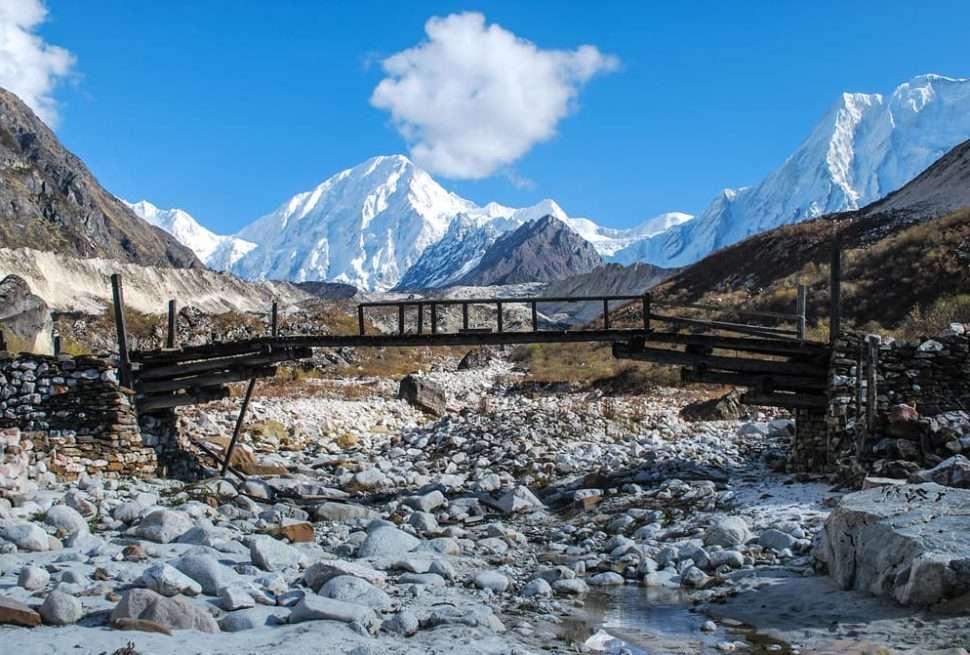
Suspension bridges and blind corners deserve their own mention because they are where most near-misses actually happen on Himalayan trails. Never cross a swinging bridge at the same time as a loaded animal train, since the extra weight and movement can make the bridge sway unpredictably. Wait until the animals have fully crossed, then cross yourself, even if that means standing still for a few extra minutes. On blind corners, a quick pause and a listen for bells before committing to the turn takes three seconds and prevents most trail collisions before they happen.
Guides on routes through the Langtang region reinforce this constantly, because the terrain there mixes narrow ridgelines with frequent animal traffic. If you trek the Langtang Valley Trek, you will notice your guide instinctively pausing at almost every blind bend, listening before stepping forward, a habit worth copying on any trail in Nepal.
Teahouse Trail Etiquette Nobody Explains
The unwritten rules do not stop when you reach the teahouse at the end of the day. Teahouses are family-run businesses, often the owner’s actual home, and treating them like a hotel chain leads to friction fast. Good teahouse etiquette in Nepal keeps the whole system running smoothly for every trekker who passes through, not just you. These small habits also tend to earn you better service, warmer conversation, and sometimes an extra blanket on a cold night.
Boots, Doors, and the Unwritten Teahouse Code
Remove your boots before entering the dining hall or any indoor sleeping area, since muddy trail boots track dirt through spaces that families clean daily by hand. Most teahouses have a boot rack or designated spot near the entrance, and using it without being asked signals that you understand local customs. Close doors gently behind you, especially at altitude, since keeping warmth inside matters far more in a stone teahouse at 4,000 meters than it does at home. These habits take seconds to learn but make a noticeable difference in how warmly you are welcomed back the next time you pass through.
Sharing the Dining Hall Without Annoying Everyone
Dining halls double as the only heated room in most teahouses, which means everyone gathers there after dark, from solo trekkers to full guided groups. Keep noise reasonable after 9 PM, since early starts are the norm and thin walls carry sound easily through these small wooden lodges. Order your dinner early in the evening rather than right before the kitchen closes, because most teahouses cook one meal at a time on a single stove, and last-minute orders slow everyone down. Simple courtesies like these make the shared space work for the entire group, not just the loudest table.
Cultural Rules You Should Know Before You Trek in Nepal
Beyond traffic and teahouses, the Himalayan trail carries deep cultural weight, particularly through Buddhist and Hindu communities along routes like Upper Mustang and the Everest region. These customs are not tourist performances; they are living practices that locals follow every single day, trek season or not. Respecting them is not optional if you want a genuine, respectful experience rather than a superficial one.
Walking Clockwise Around Mani Walls and Chortens
Mani walls, stupas, and chortens should always be passed on your left side, meaning you walk clockwise around them, following the same direction as the carved prayers themselves. This tradition comes from Tibetan Buddhist practice and appears constantly on high routes like Upper Mustang Trek, where mani walls line the trail for kilometers at a time. Locals notice immediately when trekkers walk the wrong direction, even if they are too polite to correct you, so getting this right from day one shows genuine respect. It costs nothing extra in time or effort, just a small shift in which side of the path you choose.
Greetings, Photos, and Respecting Local Villages
A simple “Namaste” with hands together goes further than any amount of gear ever will, and locals respond warmly to trekkers who make the effort. Always ask before photographing people, homes, or ceremonies, since a camera pointed at someone without permission feels intrusive no matter how beautiful the shot might be. Monasteries and gompas often restrict photography inside prayer halls entirely, and a guide will always let you know when to put the camera away. These small acts of respect shape how welcome trekkers feel in villages along every route, from the busy Annapurna trails to quieter paths through Manaslu.
Trail Safety Rules That Double as Etiquette
Some Himalayan trail rules exist purely for safety, yet they also function as basic courtesy toward everyone else sharing the path with you. Ignoring them does not just put you at risk; it slows down and endangers the porters, guides, and animals working around you. Building these habits early makes every day on the trail calmer and considerably safer.
Space, Poles, and Passing Porters Safely
Give porters extra space when passing, since their loads often extend wider than their own body and can catch an unaware trekker off guard. Keep trekking poles pointed downward and close to your body on narrow stretches, because a poorly angled pole becomes a tripping hazard for the person walking behind you. When resting, step fully off the main trail rather than pausing in the middle of it, even if that means a two-minute detour to a wider spot. Porters carrying loads for trekkers on routes like the Annapurna Base Camp Trek rely on trekkers following these small habits consistently, day after day.
What to Do When You Meet a Mule Train on a Cliffside Trail
Cliffside sections deserve extra caution, since a startled animal has nowhere safe to go but toward the trekker in its path. The moment you hear bells on an exposed stretch, move to the mountainside immediately, plant your feet, and stay still until the entire train has passed. Avoid sudden movements, bright umbrellas, or flapping rain jackets near animals, since unexpected motion is what spooks them most. Guides on high-altitude routes drill this habit constantly, because a single startled mule on a narrow cliff trail is one of the few genuinely dangerous situations a trek can produce.
Why These Rules Matter for Every Trek in Nepal
These Himalayan trail rules are not specific to one region; they apply whether you are walking a short cultural route or a demanding high-altitude circuit. Trekkers heading toward Everest Base Camp, the shorter 9-day Annapurna Base Camp Trek, or a cultural walk through the Kathmandu City Tour all encounter some version of yak traffic, teahouse etiquette, or local custom along the way. Even lower-altitude add-ons like the Pokhara City Tour benefit from understanding basic trail courtesy, since Nepal’s mountain culture extends well beyond the high passes.
If altitude and trail safety are on your mind, our guide on altitude sickness warning signs pairs well with this one, and our breakdown of teahouse life on the trail goes even deeper into evenings spent around the stove. Trekkers still deciding on a route often find our post on choosing a trek based on fitness level useful before locking in dates, and our seasonal gear guide covers what to actually bring once your route is set.
How TrekkersTrekNepal Guides Teach You These Rules on the Trail
Every guide at TrekkersTrekNepal grew up in these mountains, which means these Himalayan trail rules are not something they memorized from a manual, they are habits built over a lifetime. On your first day with any of our groups, whether you join the Ghorepani Poon Hill Trek or a longer route through the Best Nepal Trekking Annapurna region, your guide walks you through yak etiquette, teahouse manners, and cultural customs naturally, without turning it into a lecture. This is one of the biggest advantages of trekking with an experienced, licensed local team instead of navigating these unspoken rules alone.
- Local, licensed guides who grew up walking these exact trails and know every bend, bell pattern, and teahouse family personally
- Small group sizes that make it easy for guides to walk you through trail etiquette in real time, not just before departure
- Support across every major region, including the Everest Region, Langtang Region, and Upper Mustang region
- Flexible trip types, from Short Treks in Nepal to full Classic Treks and immersive Cultural Tours
Choosing the Right Trek and Learning as You Go
You do not need to memorize every rule before you land in Kathmandu, since a good guide teaches you naturally as situations come up on the trail. What matters most is choosing a team that actually walks these routes regularly and treats local custom as second nature rather than an afterthought. Whether your goal is the classic climb toward Annapurna Base Camp, a wildlife-focused add-on through our Wildlife and Nature Tours, or a full Adventure Trek across multiple regions, the same unspoken rules of yak traffic, bells, and trail respect will follow you the entire way.
Ready to Walk the Trail the Right Way?
Understanding the unspoken rules of the Himalayan trail turns you from a nervous first-timer into a trekker who moves through the mountains with confidence and respect. TrekkersTrekNepal has spent years guiding trekkers through exactly these situations, and our team is ready to walk you through it in person, one bell, one bridge, and one teahouse at a time.
- Call or WhatsApp us directly at 9841219764 to talk through your route and travel dates
- Get a personalized quote for any trek, from short cultural walks to full high-altitude circuits
- Browse full itineraries on our trekking and tour pages before you commit to dates
- Reach our team anytime through our Contact Us page, open 8 AM to 9 PM, Sunday to Friday
- Learn more about our guides and licensing on our About Us page
The mountains reward trekkers who show up ready to listen, not just to hike, and that starts with understanding the trail long before you ever hear your first bell around a blind corner.